
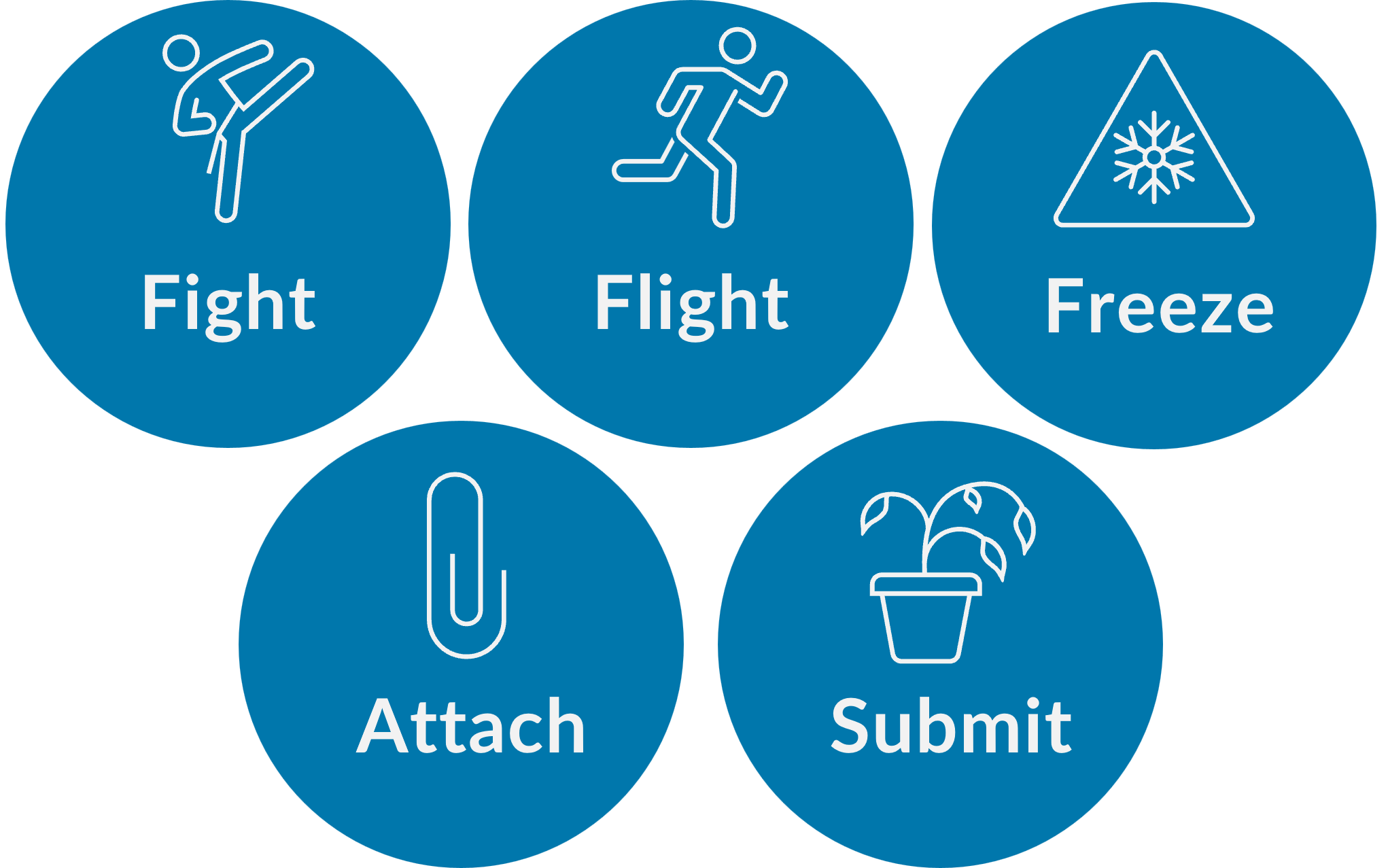
The five stress responses are instinctual reactions that we may experience in response to a perceived threat or stressful situation. Each response serves as a way for the body and mind to protect itself or cope with the stressor.
Fight involves an instinctual confrontation of source of “danger”. This can manifest as aggression, assertiveness, or a readiness to defend oneself or others. It’s characterised by an increase in heart rate, blood pressure, and the release of adrenaline to prepare the body for a physical altercation.
Flight involves a strong urge to escape or distance oneself from the perceived threat. It’s a survival mechanism that prioritizes removing oneself from a potentially dangerous situation.
Freeze involves a temporary loss of the ability to move or take action, in essence being immobilised. This reaction is often seen in prey animals in the wild when they’re trying to avoid detection by a predator. In humans, it can manifest as feeling paralyzed, unable to make decisions, or experiencing a sense of being “stuck.”
Attach involves seeking social connection and support as a way to cope with stress. It can include turning to friends, family, or a support network for comfort, reassurance, or assistance in dealing with the challenging situation. Seeking attachment can provide emotional and practical support during times of stress.
Submit involves yielding or surrendering to a perceived threat or stressor. It can manifest as a passive or submissive posture, demeanour, or behaviour. Submitting may be a way of avoiding further conflict or harm, especially when other options like fighting or fleeing are not perceived as viable or safe.
It’s important to note that these responses are part of the body’s natural stress response system, often referred to as the “fight or flight” response. They can vary in intensity and duration depending on the individual, the specific stressor, and the circumstances surrounding the situation.
Additionally, while these responses have evolutionary roots in survival instincts, in modern times they can sometimes be maladaptive. For example, in situations that do not involve immediate physical danger (such as social pressures), these responses may not always be the most effective or healthy coping mechanisms. In such cases, it’s important to learn and apply more appropriate stress management techniques.
