
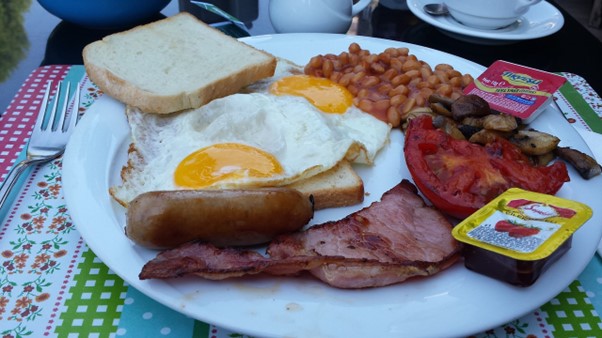
We all love a full English breakfast right? The NHS recommend no more than 20-30g of saturated fat per day. A full English breakfast typically contains around 20g of saturated fat so is pretty close to the maximum you should be consuming (30g is for an adult male).
How do I know if a food is high in fat?
Any food item which is more that 17% fat is considered high. To be classed as low fat it needs to contain 3% fat or less.
With saturated fat, anything more that 5% is considered high and it needs to contain 1.5% or less to be low in saturated fat.
To claim a product is fat-free it needs to contain less than 0.5% or 0.1% saturated fat.
What does fat do for our body?
- Fat is the most concentrated source of energy
- The body requires essential fatty acids to function effectively
- Fats have a transportation function by carrying some vitamins and antioxidants
- They protect essential organs by forming a protective layer (visceral fat)
- Insulation through subcutaneous (under the skin) stores is an important function
- It is a structural component of brain tissue
What is cholesterol?
Cholesterol is a wax-like substance belonging to the steroid family. It is vital for normal functioning of the body and is made mainly by the liver. Cholesterol has two types, low density and high density lipoprotein – you may have heard of LDL and HDL. LDL is considered ‘bad’ and HDL is considered ‘good’.
High cholesterol itself doesn’t necessarily cause any symptoms but it increases the risk of serious health conditions. In general, excessive consumption of dietary cholesterol can be reduced by any measure which reduces the intake of saturated fats.
What are fatty acids?
Dietary fat consists primarily of triglycerides as well as other components (cholesterol for example). Triglycerides (left) have a glycerol backbone with three long or medium-chain fatty acids attached to it.
These fatty acids can be from more than one type and determine not only the physical characteristics of the fat but the effect it has on our bodies.
Saturated fatty acids come mainly from the storage fats of animal products (meat fats, milk, butter, cheese etc) as well as manufactured margarines and fat spreads. This type of fat has a hypercholesterolaemia effect, it raises LDL cholesterol.
Monounsaturated fatty acids are usually liquid at room temperature. The most concentrated dietary sources of monounsaturated fatty acids are olive oil and rapeseed oil. Other sources include avocadoes, peanut butter and many nuts & seeds. Dietary monounsaturated fatty acids are regarded as the most beneficial type of fatty acid as they don’t increase cholesterol levels unlike saturated fatty acids. They lower LDL cholesterol without impacting HDL cholesterol.
You may have heard the term essential fatty acids. Polyunsaturated fatty acids have a pivotal role in many metabolic processes. These are normally consumed because we don’t have the enzymes to make omega 6 and omega 3. Most dietary polyunsaturated fat is in the form of oils such as sunflower or groundnut or oily fish such as salmon or mackerel.
What are trans fats?
This is a type of fat created in an industrial process by adding hydrogen , hence the term hydrogenated fat. This is normally by hydrogenating vegetable fats which are high sources of polyunsaturated fat. BUT the trouble is, is that they appear to be metabolised in a similar way to saturated fate once the process has been carried out.
